
Some of childhood’s biggest moments begin on the floor.
It is where babies first stretch, reach and roll. Later, it becomes the setting for toddlers building towers, reading stories with siblings, creating imaginary worlds and spending time together.
Floor play does not need elaborate toys or a carefully planned activity. Often, it simply needs time, room to move and a comfortable surface where children and grown-ups can play together.
This is why a playmat can become one of the most hardworking pieces in a family home: a familiar place for first rolls, little tumbles, building, reading and everyday connection.

What is floor play?
Floor play is any play that takes place on a safe, open surface where a child has room to move, explore and follow their own interests.
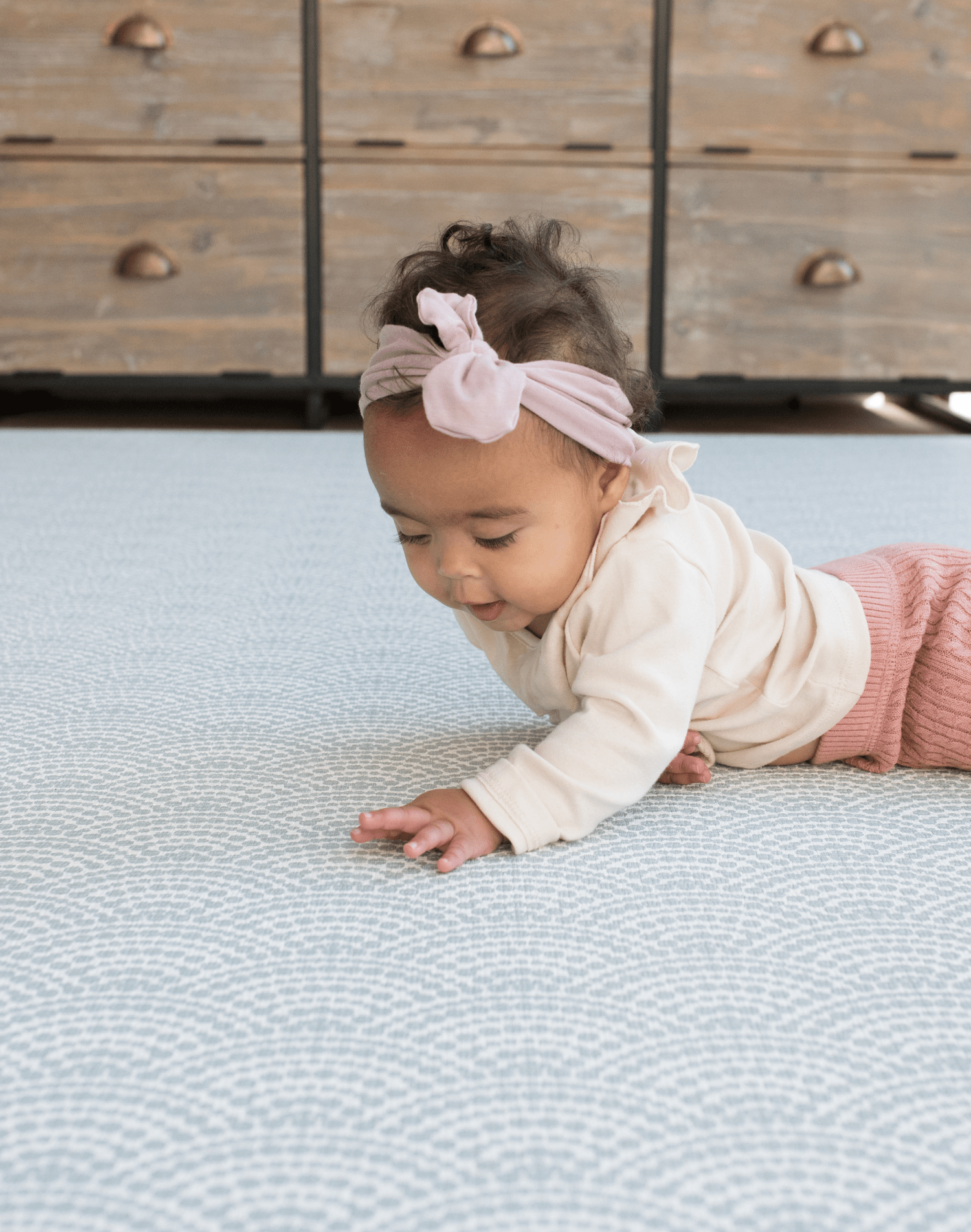
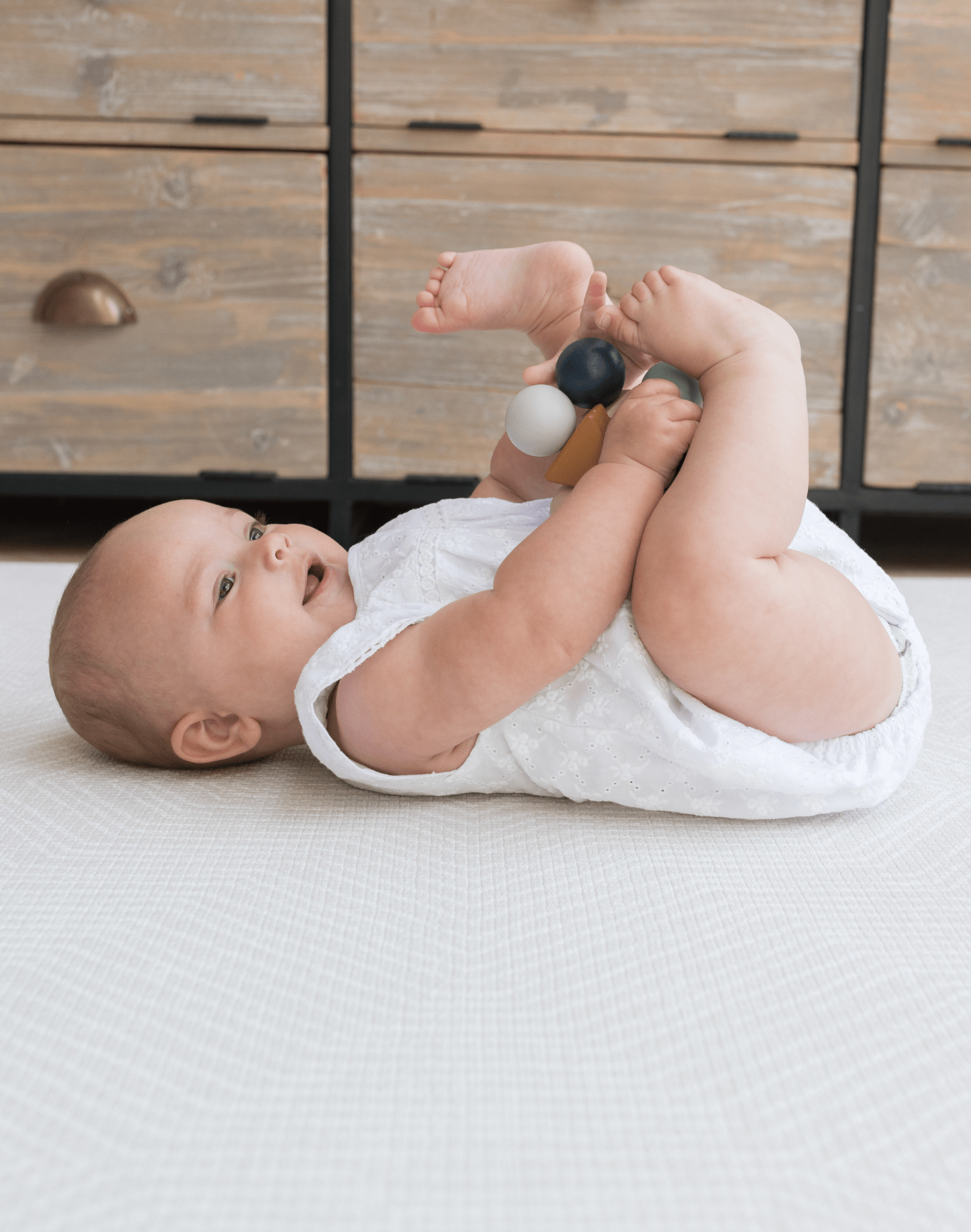
For a baby, this might mean lying on their back, reaching for a toy or enjoying supervised tummy time.
For a toddler, it could involve stacking blocks, pushing cars or hosting a teddy-bear picnic.
As children grow, the same space might become a train track, reading corner, puzzle area, den or wonderfully elaborate imaginary world.
The play changes. The value of having room to explore remains.
Why is floor play important?
Play is one of the main ways children discover how their bodies work, test ideas and connect with other people.
A clear floor space gives them the freedom to:
-
Move without being restricted by a seat or piece of equipment.
-
Follow their own curiosity.
-
Repeat actions until they feel familiar.
-
Solve small problems through trial and error.
-
Play independently or alongside others.
-
Invite parents and carers into their world.
It is not about turning every moment into a lesson or trying to speed up development.
It is about creating a safe, comfortable place where play can unfold naturally.
Why use a playmat for floor play?
Children can play on many safe and suitable surfaces. A supportive playmat can make that space more comfortable, practical and inviting for the whole family.
A playmat can provide:
A softer place to move
Cushioning creates a more supportive surface for first stretches, rolls, crawling and everyday play, particularly on hard floors.
A clear space for play
A playmat can help define an area for children without separating them from the rest of family life.
In a living room or open-plan space, it becomes a familiar place where toys can be explored, books can be read and grown-ups can join in.
Comfort for adults too
Floor play is not only for children.
A cushioned surface makes it more comfortable for parents, grandparents and siblings to sit, build, read and spend time together.
A practical surface for everyday life
Play often comes with crumbs, spills, paintbrushes and muddy footprints.
An easy-to-clean playmat allows the space to be used properly, rather than treated as something that needs to be protected from family life.
A longer-lasting part of the home
A well-sized playmat can support several stages, from supervised tummy time to toddler play, puzzles, building and quiet reading.
Choosing a design that feels at home in a shared room also means it can remain part of the space rather than needing to be packed away after every play session.
How does floor play support movement?
A clear, supportive surface gives babies and children opportunities to move their bodies in different ways.
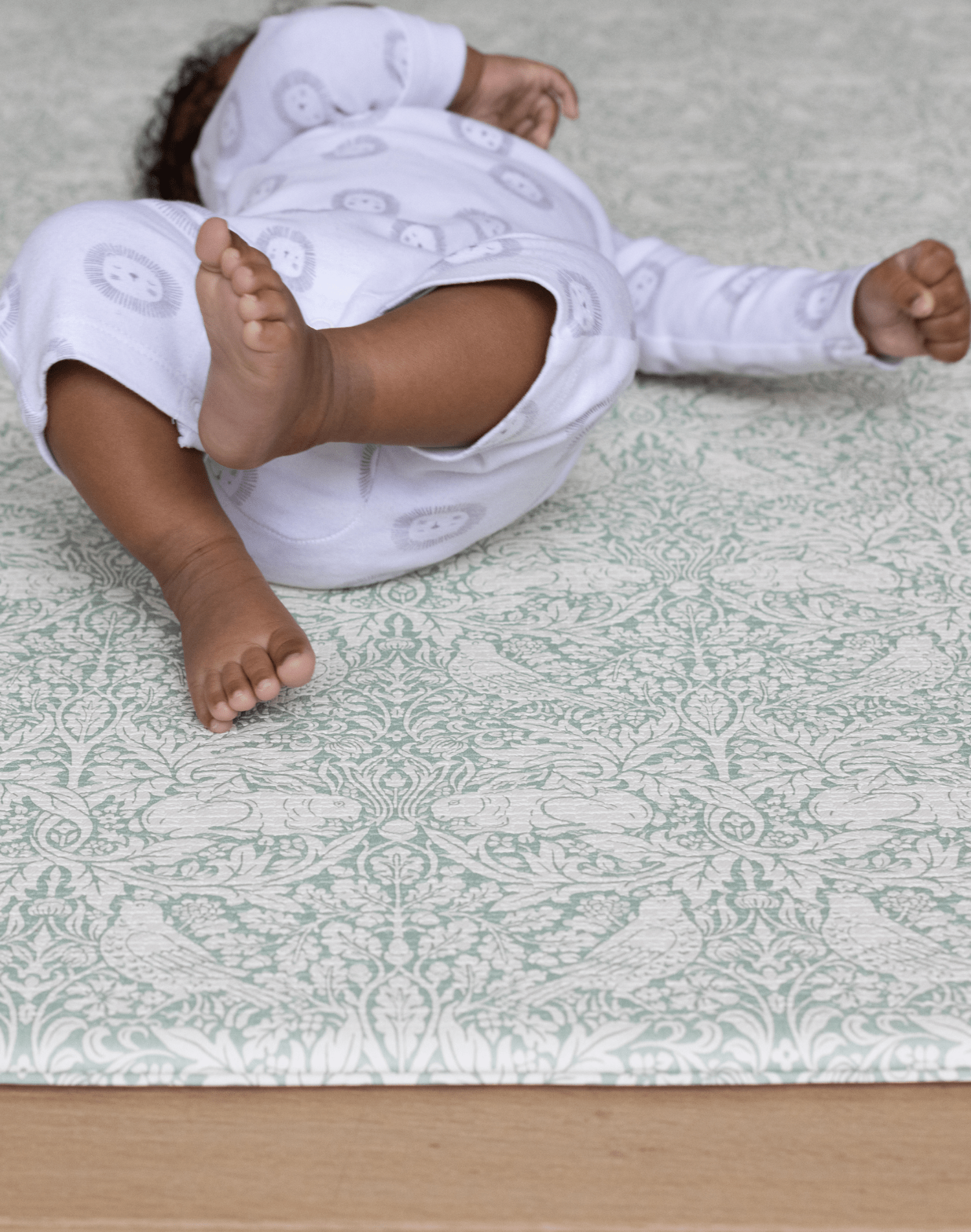
A baby lying on their back can kick, turn their head and reach towards an object. During supervised tummy time, they begin using their neck, shoulder and upper-body muscles.
As children become more mobile, floor play gives them room to:
-
Reach and turn.
-
Roll between positions.
-
Push up through their arms.
-
Crawl and change direction.
-
Carry and move objects.
-
Practise balance and coordination.
-
Explore what their bodies can do.
These movements often happen naturally when a child has enough space, time and something interesting to investigate.
A playmat should be supportive rather than excessively soft, giving children a stable surface on which to move and explore.
Every child develops differently. Speak to your health visitor, GP or another qualified health professional if you have concerns about your child’s movement or development.
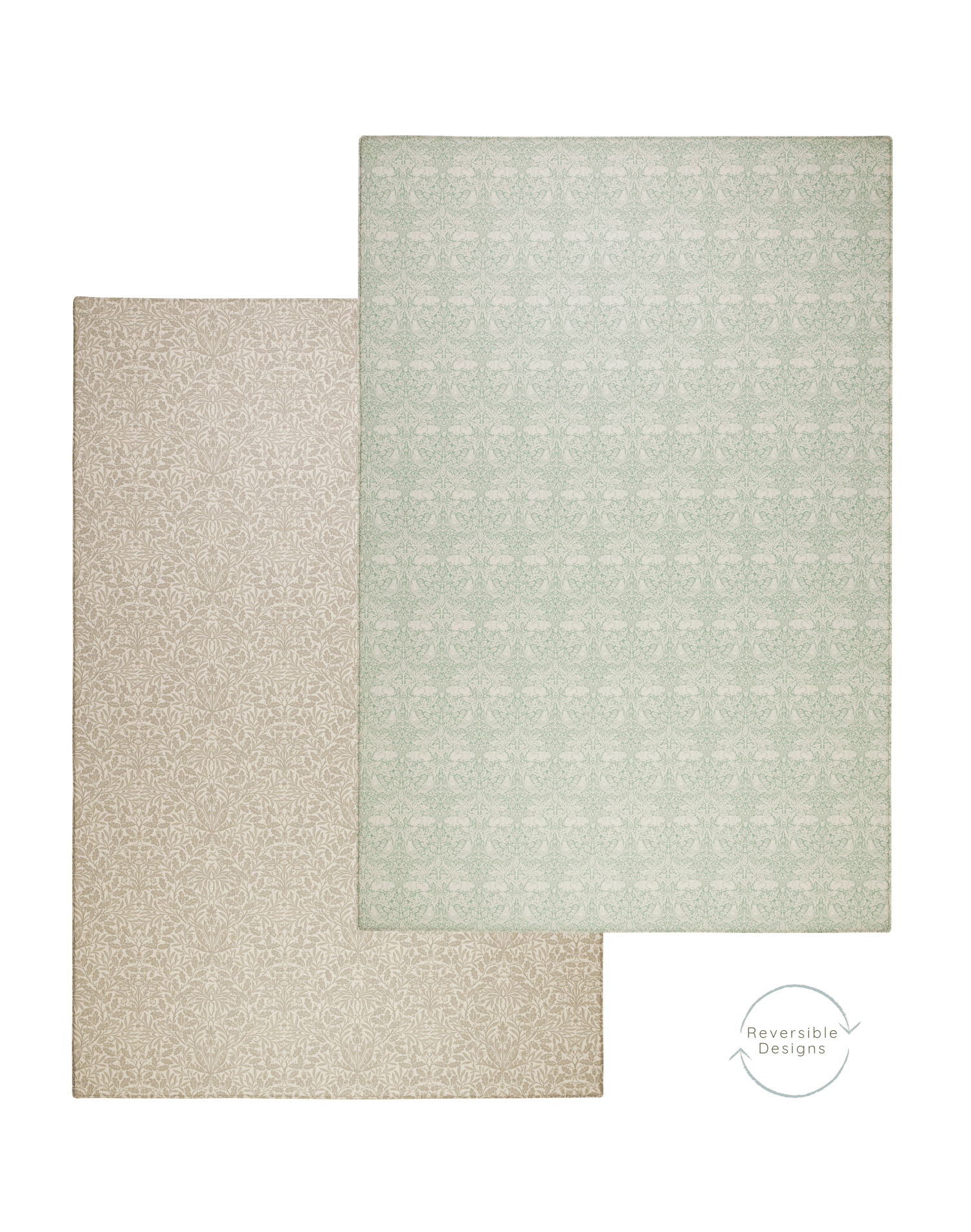
 The Morris & Co Strawberry Thief Playmat
How does floor play encourage learning?
To an adult, repeatedly filling and emptying a basket might look like a very simple game.
To a child, it is an experiment.
What fits inside? What happens when the basket is tipped over? Can the objects be sorted, stacked or carried somewhere else?
Floor play gives children the freedom to test ideas without needing to find one correct answer. They begin to explore cause and effect, solve small problems and use familiar objects in new ways.
A cardboard box can become a boat. A wooden spoon can become a drumstick. A row of cushions can become a bridge across a crocodile-filled river.
The activity does not need to look educational to be valuable.
How does floor play support connection?
Getting down on the floor brings grown-ups closer to a child’s level.
It becomes easier to notice what has caught their attention, respond to their sounds or ideas and join the game without taking it over.
This might mean:
-
Copying a baby’s expression or sound.
-
Taking turns rolling a ball.
-
Adding one block to a tower.
-
Reading the same book again.
-
Listening while they explain an imaginary world.
-
Simply sitting nearby while they play.
You do not need to lead every activity or provide constant entertainment.
Your attention and interest often matter more than an impressive setup.
A comfortable playmat can make these moments easier, giving adults somewhere supportive to sit, stretch out and stay a little longer.
What should you look for in a playmat?
The right playmat should support the way your family really lives.
Consider the following before choosing one.
Enough room to move
The mat should provide space for your child’s current stage while allowing for how play may grow.
A small area for early baby play can quickly become home to train tracks, books, building blocks and imaginative worlds.
Marking out the dimensions with masking tape can help you understand how the mat will fit in your room.
Supportive cushioning
Look for cushioning that softens hard flooring while still providing a stable surface for movement and play.
It should also feel comfortable for adults sitting or kneeling beside children.
A one-piece surface
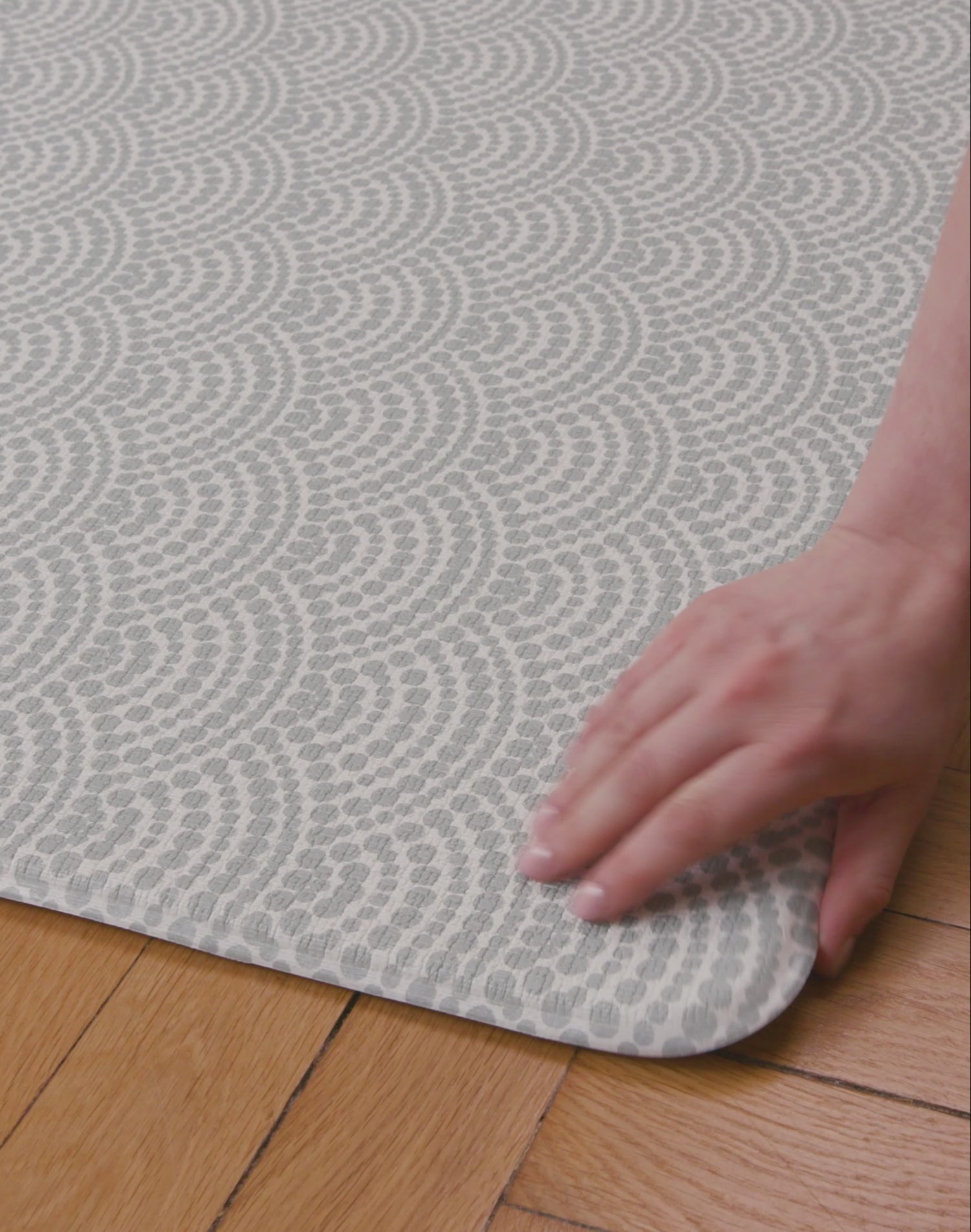
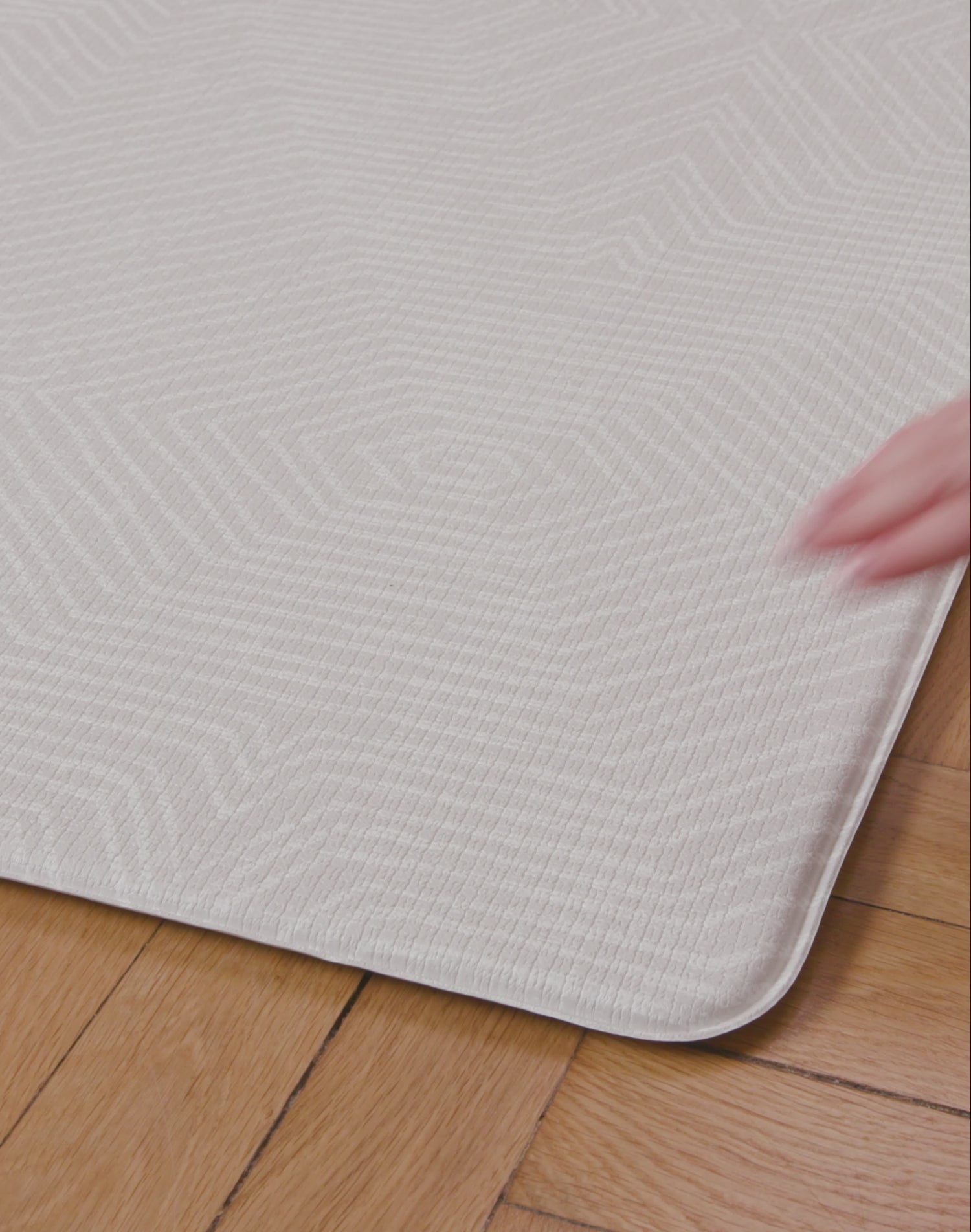
A seamless, one-piece mat provides an uninterrupted area for movement, building and play, without separate tiles or pieces moving apart.
Easy cleaning
Choose a surface that can be wiped clean after snacks, crafts and everyday spills.
A playmat is there to be used, not kept perfectly untouched.
A design suited to your home
Playmats often sit in living rooms, kitchens and shared family spaces.
A rug-like or reversible design can help the play area feel connected to the wider room, rather than looking like a temporary addition that needs to be hidden away.
Room to grow
Consider whether the mat will continue to work beyond the baby stage.
A versatile playmat can become the place for first rolls, toddler play, family games, drawing, reading and much more.

What does floor play look like at different ages?
Floor play for babies
In the earliest months, play can be wonderfully simple.
Try:
-
Lying beside your baby and talking or singing.
-
Placing a toy within comfortable reaching distance.
-
Slowly moving an object for them to follow.
-
Looking at a baby-safe mirror together.
-
Reading a simple book while lying beside them.
-
Offering short periods of supervised tummy time.
Tummy time should only take place while your baby is awake, alert and supervised.
Some babies prefer to begin on a parent’s chest or lap before trying the floor. Little and often may feel more manageable than one long session.
A clean, supportive playmat creates a familiar place where these short moments can become part of the daily routine.
Floor play for moving babies
Once babies begin rolling, sitting or crawling, their play space starts to expand.
You might:
-
Place toys around them rather than directly in front.
-
Offer lightweight objects they can pick up and move.
-
Add cups or containers for filling and emptying.
-
Roll a soft ball between you.
-
Hide a toy beneath a cloth.
-
Create clear space to crawl towards an interesting object.
You do not need to introduce something new every day. Repeating the same actions helps babies explore them from different angles and build confidence.
Floor play for toddlers
Toddlers often want to carry, sort, repeat and do things for themselves.
Simple options include:
-
Building and knocking down towers.
-
Pushing cars along a homemade road.
-
Matching objects by colour or shape.
-
Moving toys between bowls or baskets.
-
Easy puzzles.
-
Action songs and dancing.
-
Teddy-bear picnics.
-
Pretend shops, kitchens and journeys.
A larger playmat gives these activities room to spread while still creating a clear and manageable place for play.
Floor play for older children
Floor play does not stop when children begin school.
The same space can be used for:
-
Construction sets and small worlds.
-
Puzzles and board games.
-
Drawing on large sheets of paper.
-
Dens made from sheets and cushions.
-
Reading independently or together.
-
Models made from recyclable materials.
-
Games and stories children invent themselves.
Try not to decide what the finished game, model or story should look like.
The crooked tower, unusual road system or story that makes little sense to anyone else may be exactly where the best thinking is happening.
Does floor play require special toys?
No.
Meaningful play can begin with simple objects already found at home, provided they are safe and suitable for your child’s age.
Useful options include:
-
Cardboard boxes.
-
Building blocks.
-
Scarves or pieces of fabric.
-
Cups and containers.
-
Toy animals.
-
Books.
-
Paper and washable crayons.
-
Cushions and blankets.
-
Clean recyclable packaging.
You do not need to make everything available at once.
A smaller selection can make it easier for children to choose, concentrate and find new ways to use familiar objects.
Always consider choking risks and closely supervise play involving small parts, water or unfamiliar household items.
How can you create a floor-play space at home?
A useful play space does not need to be a separate playroom.
It could be a playmat beside the sofa, a corner of a bedroom or a defined area within an open-plan family room.
Keep the space easy to use
When possible, leave the playmat accessible so that play does not require a complete room reset each time.
Offer a small selection
A low basket or shelf allows children to see and choose from a few age-appropriate toys and books.
Rotate rather than add
Putting some toys away and returning them later can renew interest without creating more clutter.
Follow their lead
Watch what your child is exploring before stepping in.
You can join, add an object or ask a simple question without changing the direction of the game.
Let play look like play
It may be repetitive, noisy, slow or slightly chaotic.
It does not need to produce a beautiful craft or impressive finished result to matter.

How much floor play do children need?
There is no single amount that suits every child or every day.
Floor play can happen in short pockets between other parts of family life. A few minutes of supervised tummy time, half an hour building or a quiet story together can all count.
Rather than measuring every session, focus on offering regular opportunities to move, explore and play without too much adult direction.
Some days, children may remain absorbed for a long time. On others, they may move on after a few minutes.
Both are normal.
Making room for play
It can be easy to feel that meaningful play needs a plan, special materials and a picture-perfect result. It does not.
Play might begin with a toy placed within reach, a tower waiting to be built or a blanket becoming a den.
It might involve the whole family. It might happen quietly and independently.
A playmat will not decide what happens next or tell children how to play. It simply creates a soft, supportive and familiar place where play can unfold.
Totter + Tumble playmats are made from cushioned memory foam with a one-piece, wipeable surface. They are designed for first rolls, little tumbles, family play and the inevitable crumbs and spills in between.
Because when a little room is made for play, children usually know what to do with it.
Discover Totter + Tumble playmats, made for movement, connection and everyday family play.
Frequently asked questions
Why is floor play important for babies?
Floor play gives babies opportunities to kick, reach, turn and explore different positions. Supervised tummy time also encourages them to use the muscles involved in later movement.
What is the best surface for floor play?
Choose a safe, clean and stable surface with enough room for movement. A supportive playmat can add cushioning on hard floors, protect carpets and provide a comfortable place for children and adults to play together.
What should I look for in a baby playmat?
Look for supportive cushioning, a one-piece surface, easy cleaning and enough room for movement. Consider whether the size and design will continue to work as your child grows.
What if my baby does not like tummy time?
Begin with short periods while your baby is awake and alert. You can try tummy time on your chest or lap, lie face-to-face with them or place an interesting toy nearby. Speak to your health visitor or GP if you have concerns.
Is floor play only for babies?
No. Toddlers and older children can use floor space for building, imaginative play, puzzles, reading, drawing and family games.
Do parents need to join every game?
No. Playing together supports connection, but independent play matters too. You can remain nearby and interested without directing every activity.
Is a playmat necessary for floor play?
No. Children can play on any safe, suitable surface. A playmat can provide extra cushioning, comfort and an easy-to-clean area for everyday play.