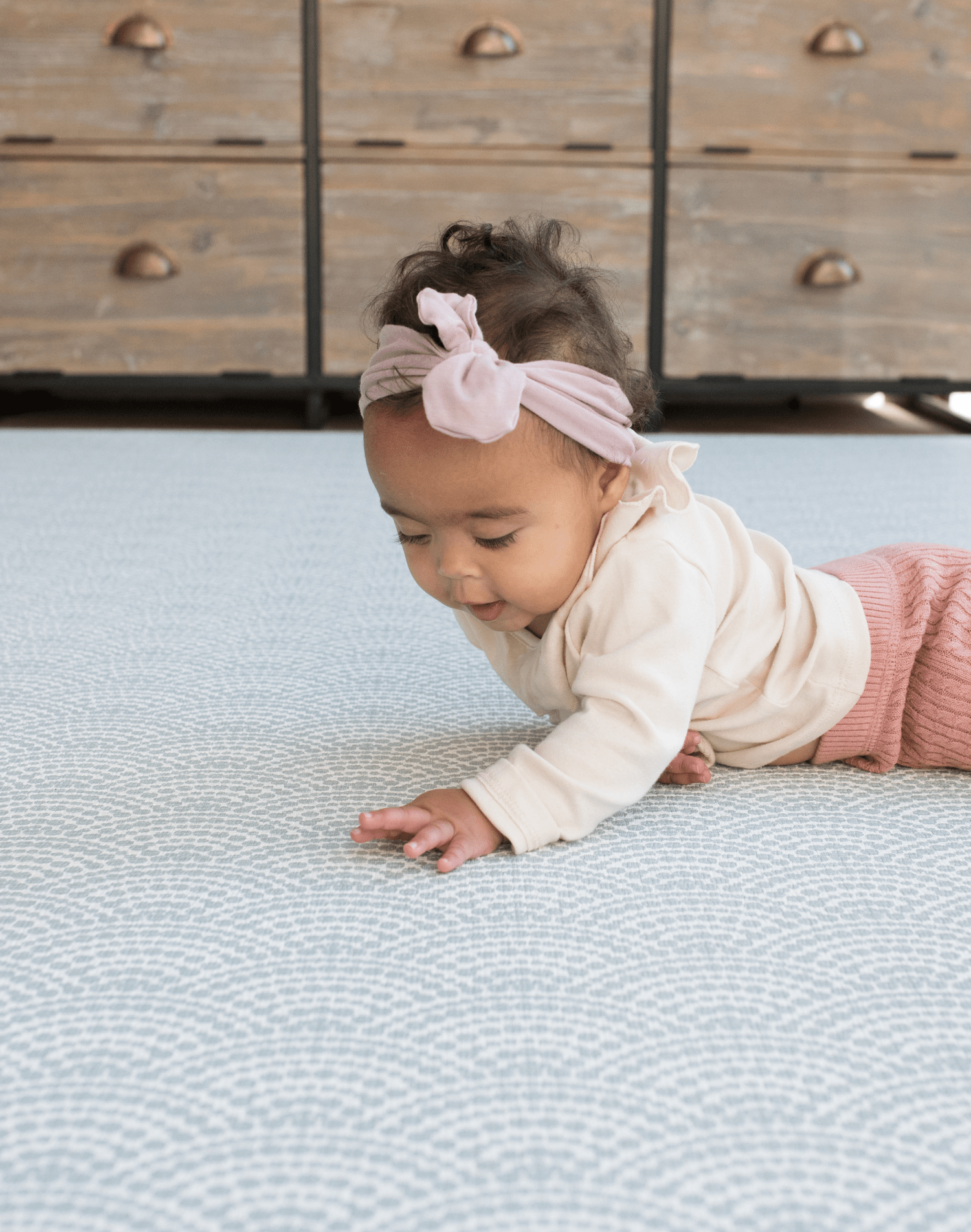
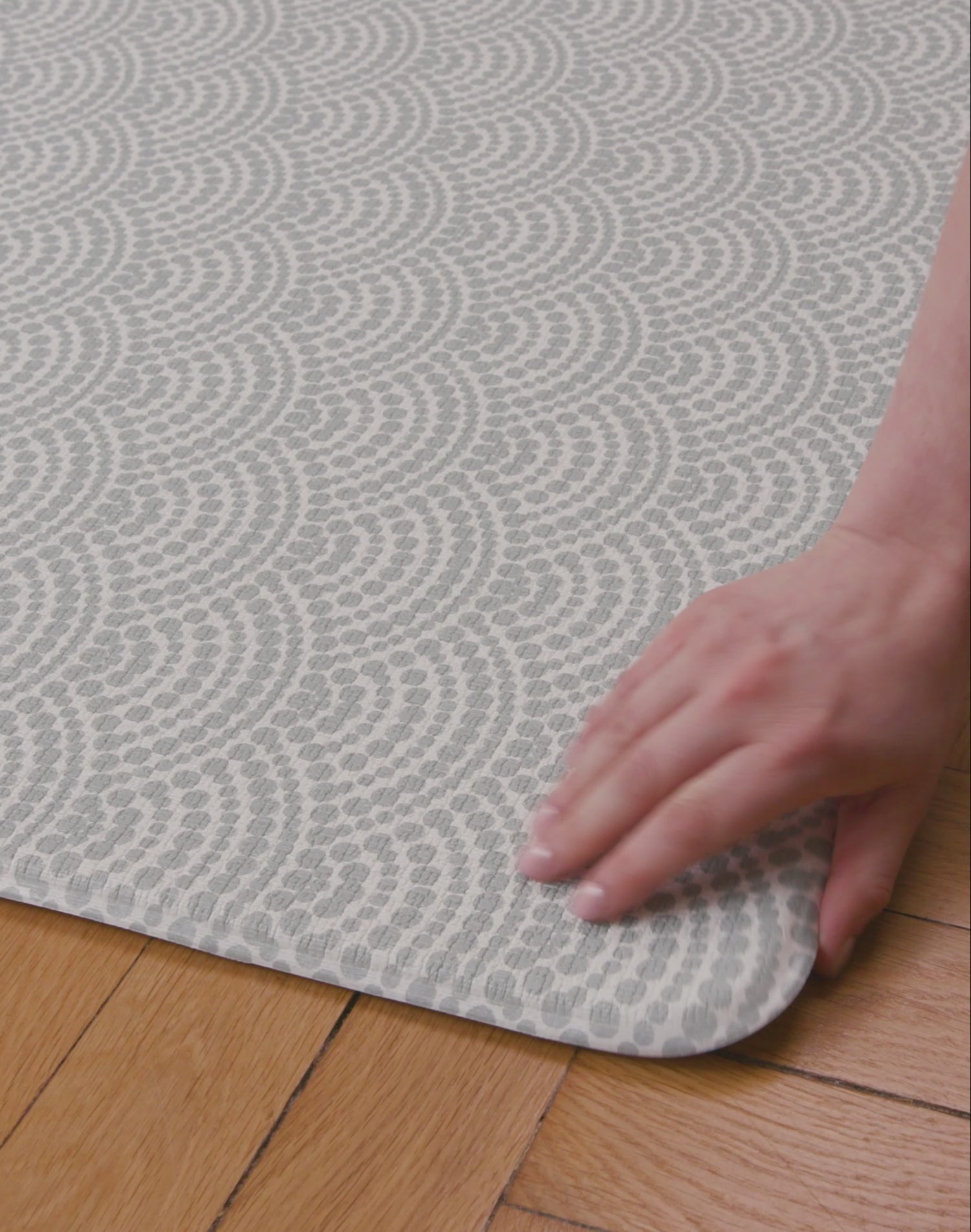
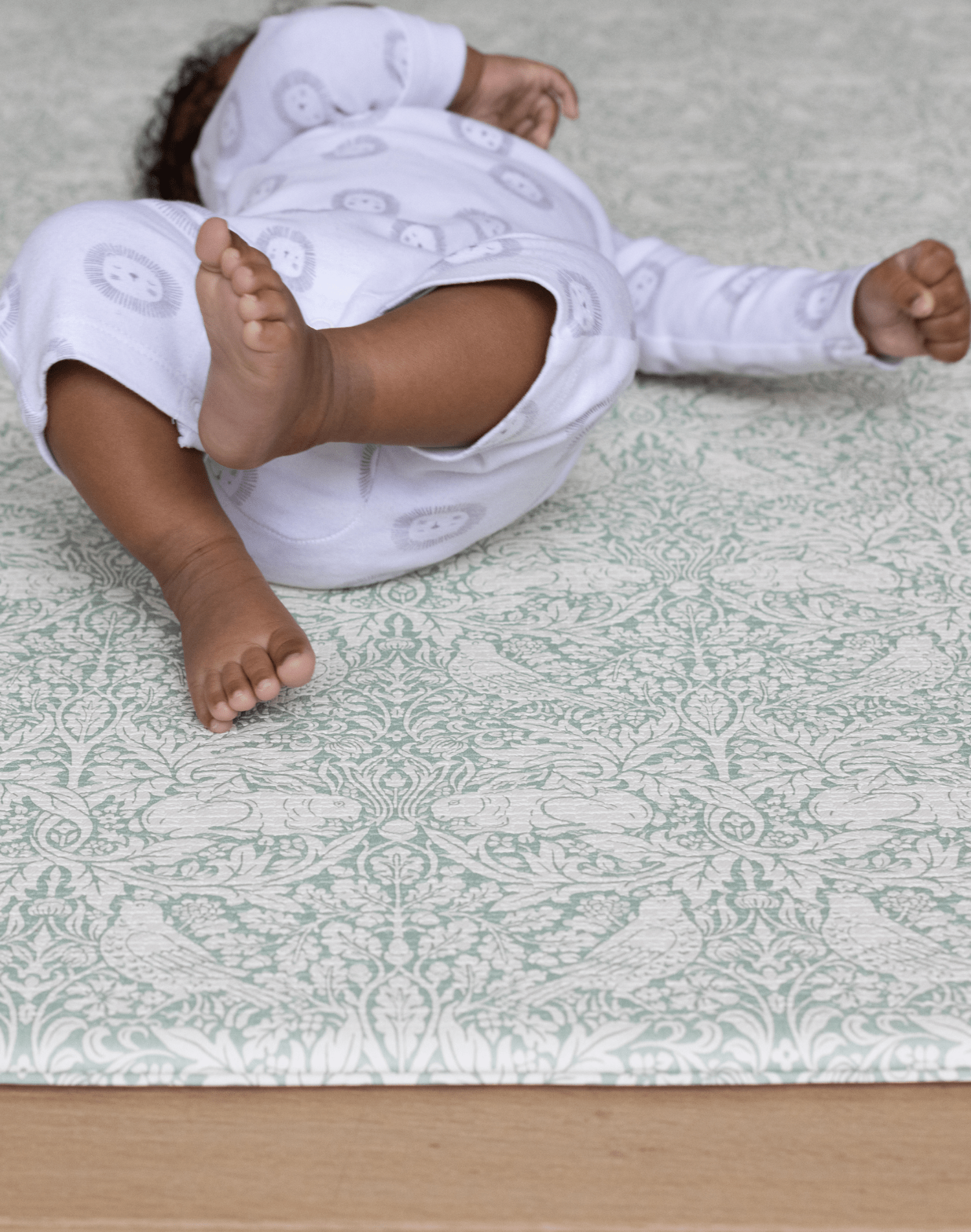
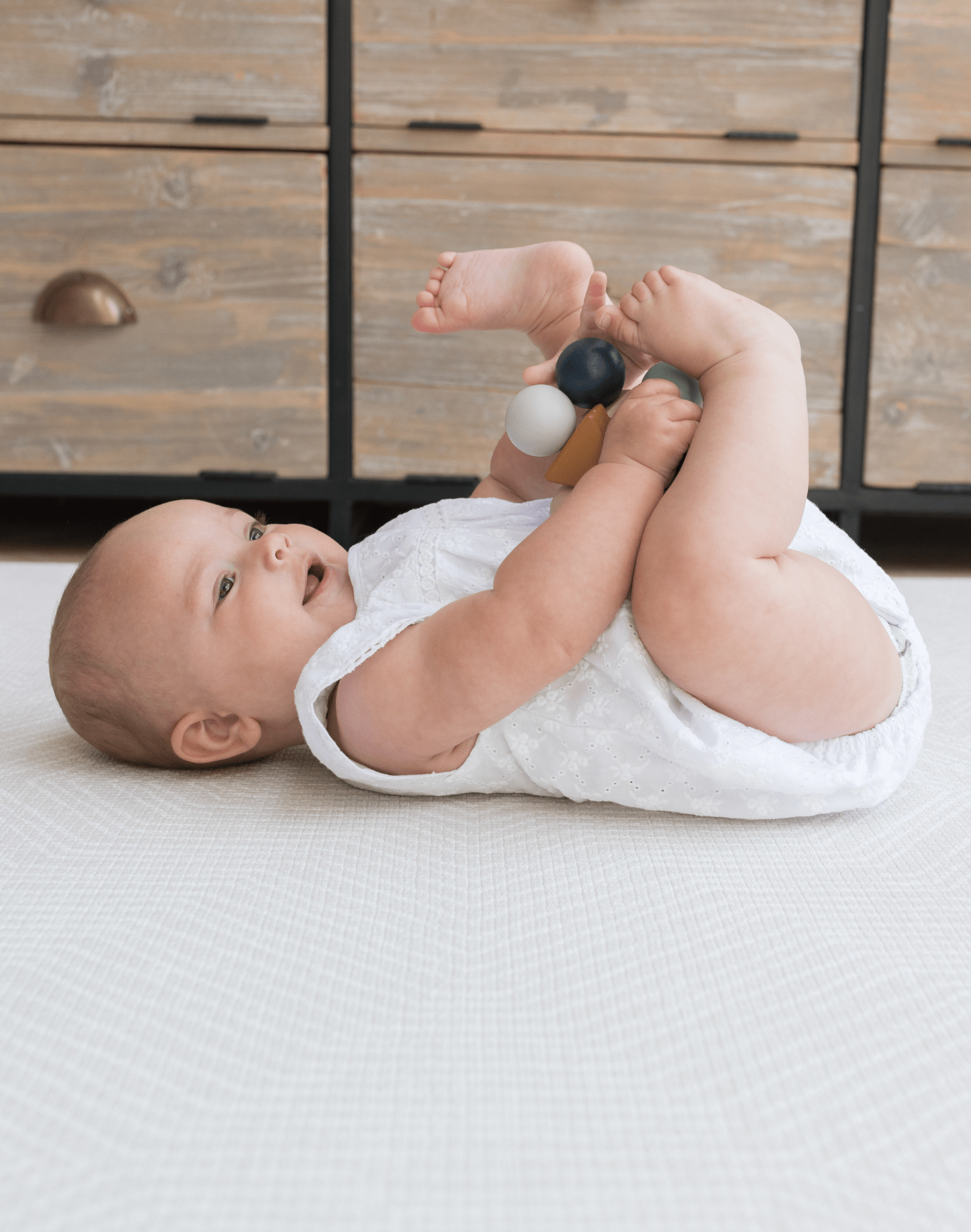
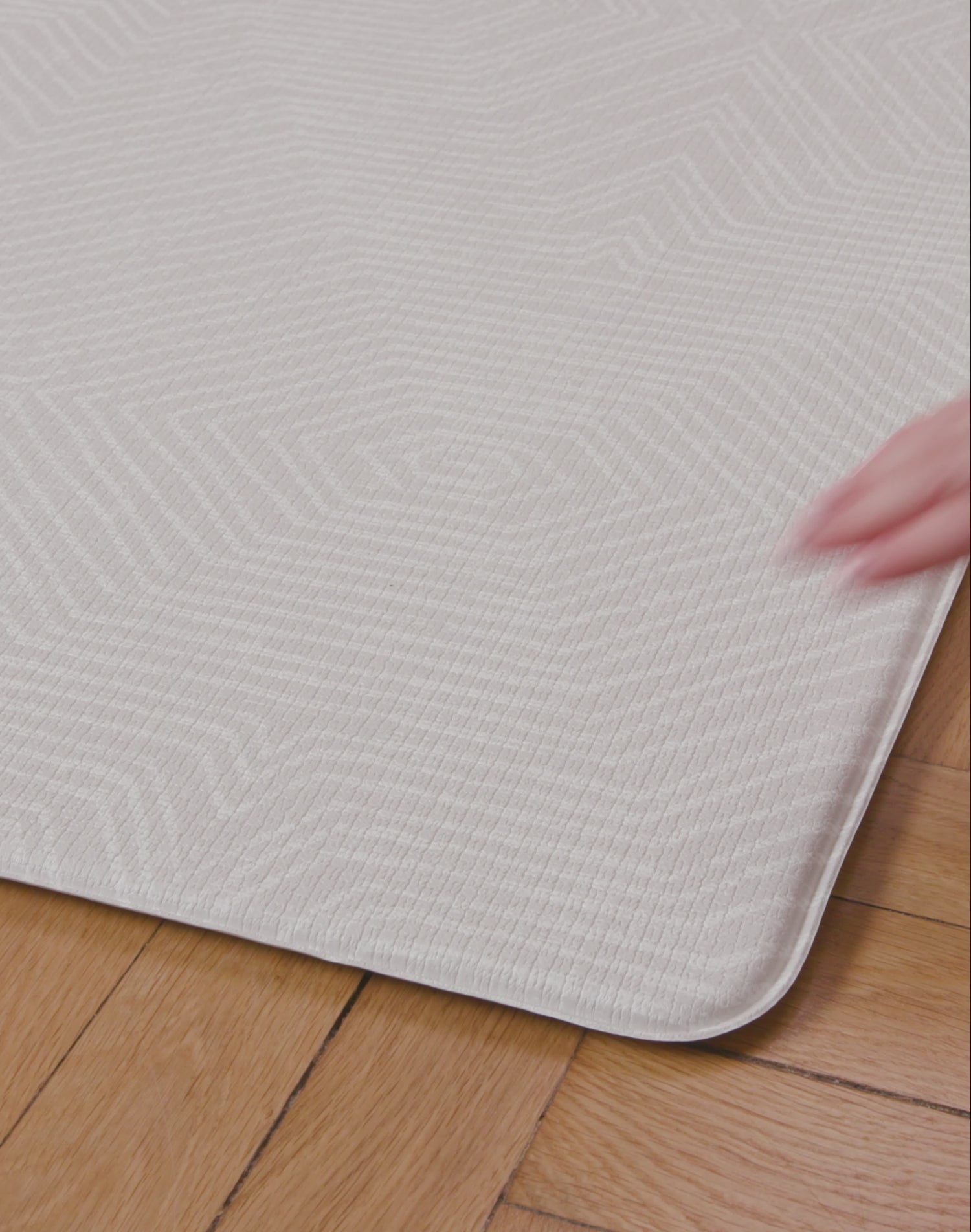

A playmat is one of the most hardworking pieces in a family home.
It needs to provide a comfortable place for first rolls, toddler tumbles and everyday play. But when it lives in a shared space, it should also feel at home alongside the furniture, colours and objects you already love.
This balance between family life and thoughtful interiors is at the heart of our collaboration with Morris & Co.
At a recent event celebrating our fifth collection together, Totter + Tumble founder, Susie, explained it simply: “We love our homes and we love our kids.” She described the space Totter + Tumble designs for as the gap between adult and children’s interiors: the real place where families live and play.
Our Morris & Co. playmats bring heritage pattern into that everyday setting. Here is what to consider before choosing yours.
 @mollyberryinteriordesign
Start with how you will use the space
Before looking at colours and patterns, think about where the playmat will live.
Will it sit beside the sofa, in an open-plan kitchen or in a dedicated playroom? Is it mainly for a baby, or will siblings, parents and grandparents use it too?
A smaller mat can create a comfortable spot for tummy time or quiet play. A larger mat gives growing children more room to move and makes it easier for adults to join them on the floor.
Think about:
-
Who will use the mat.
-
What will happen on it.
-
Whether it needs to fit around furniture.
-
How much of the room you want it to cover.
-
Whether it will stay in one place.
Choosing for everyday life first makes the rest of the decision much easier.
Choose the right playmat size
It can be difficult to judge size from measurements on a screen.
Before ordering, mark out the dimensions on your floor with masking tape. Check that doors and cupboards can still open, chairs can move comfortably and there is enough room to walk around the mat.
It is also worth choosing with the next stage in mind.
A few baby toys can quickly become train tracks, building blocks, books and wonderfully complicated imaginary worlds. A little extra room can help the mat continue to work as your child grows.
Work with the colours already in your room
Your playmat does not need to match everything.
Instead, look for a design that picks up one or two colours already present in your walls, sofa, flooring, curtains or artwork.
At our Totter + Tumble x Morris & Co. event, content creator, Vicky Burton, described how her Pimpernel playmat connected the blue of her walls with the dusky pink used elsewhere in the room.
That is often the simplest way to choose: find a design that brings together colours you already love.
The shades do not need to be identical. Related tones usually feel more natural than a perfect match.
 @thetwinwardobe
Decide whether you want calm or character
Some playmats sit quietly within a room. Others become the starting point for it.
A softer design may work well when:
-
Your room already contains several patterns.
-
You prefer a calm, pared-back interior.
-
Toys and accessories provide plenty of colour.
-
The mat will sit in a busy open-plan space.
A flowing botanical design such as Willow Boughs introduces pattern and movement without overpowering the room.
A more decorative mat may suit you when:
-
Your walls and furniture are mostly neutral.
-
You enjoy heritage or botanical patterns.
-
You want the play area to feel considered.
-
You are happy for the mat to become a focal point.
Morris & Co. designs such as Pimpernel and Blackthorn bring colour, detail and character to the floor in much the same way as a rug or piece of artwork.
There is no right answer. Choose the design that feels most like your home.
Use the playmat to bring the room together
A playmat does not have to be the final piece you choose.
It can provide the colour palette for the wider space. Take two or three shades from the design and repeat them through smaller details such as:
-
Cushions and throws.
-
Storage baskets.
-
Curtains.
-
Artwork.
-
Lamps and accessories.
This works particularly well in living rooms and open-plan spaces, where the play area needs to feel connected to the rest of the room.
Bullerswood is a natural room anchor. Adapted from an intricate Morris & Co. carpet design, its generous pattern and rug-like border give it the presence of a traditional floor covering while creating a comfortable place for family play.

Consider the scale of the pattern
Always look at photographs of the full playmat as well as close-up details.
A large-scale pattern can feel surprisingly calm from a distance and often works beautifully in an open-plan room. A smaller or more detailed pattern adds depth and can suit traditional, eclectic or more decorative interiors.
Also consider the size of your room.
A detailed design may become a strong focal point in a smaller space, while a larger room can often carry a bolder pattern more easily.
Our user generated photography is especially useful because it shows how the mat looks alongside real flooring, furniture and natural light.
Look at both sides of a reversible playmat
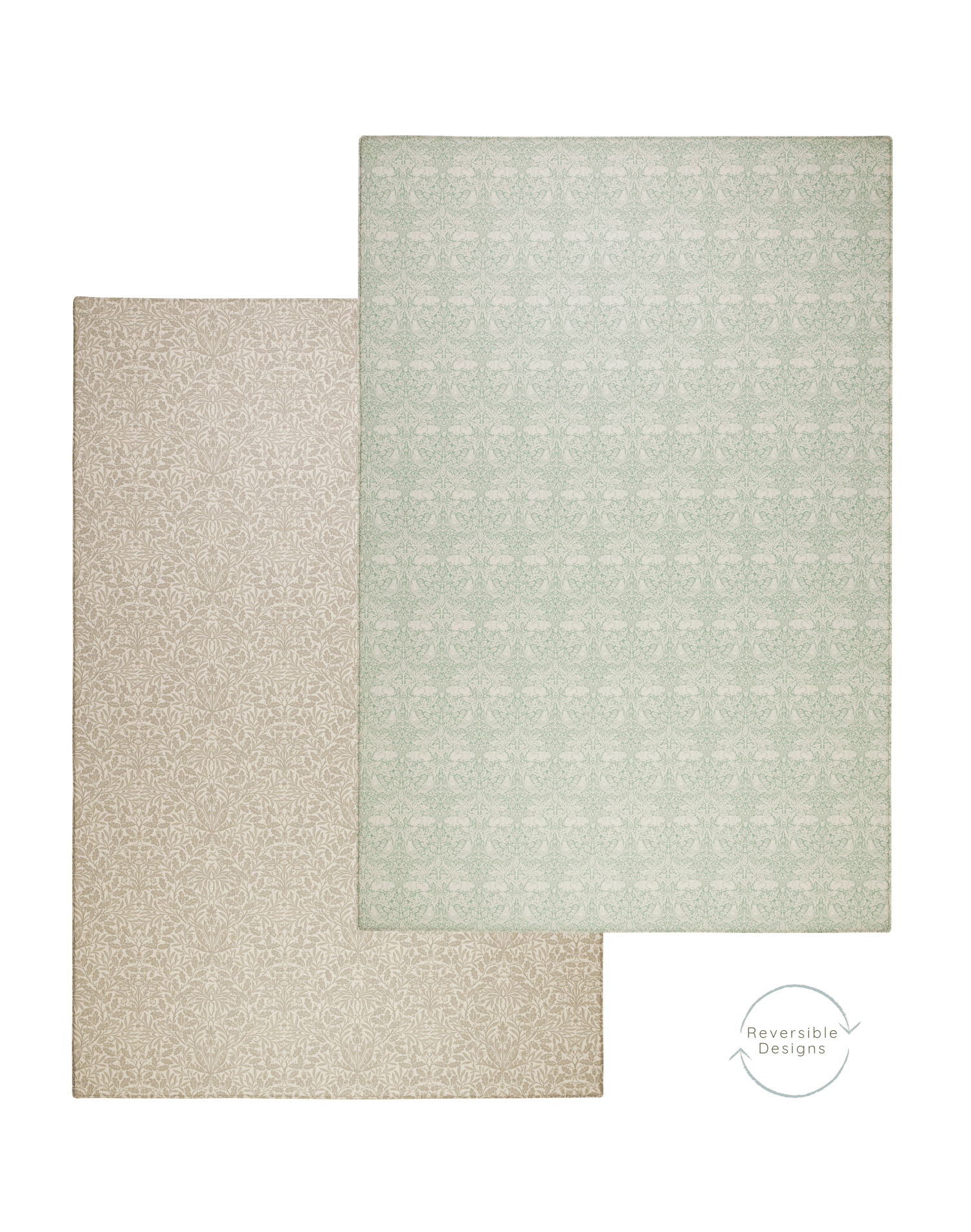
A reversible playmat gives you two designs to live with.
Consider both sides before choosing. You may want:
-
One decorative design and one quieter option.
-
Two patterns in a similar colour palette.
-
A lighter look for spring and summer.
-
A richer look for autumn and winter.
-
Different designs for different rooms.
Some families keep one side in place most of the time. Others turn their mat when the season changes or the room simply needs a refresh.
Both sides should feel like designs you would be happy to keep in your home.
Choose for your room, not the room in the photograph
Styled photography can provide inspiration, but your own space is the best reference.
Consider:
-
Whether your flooring is light or dark.
-
The colour of your largest furniture.
-
How much natural light the room receives.
-
Existing wallpaper or patterned textiles.
-
Whether your interior is modern, traditional or a mixture of both.
Morris & Co. patterns do not only belong in traditional homes. Their botanical shapes can add warmth to contemporary interiors, while also sitting naturally alongside period features, vintage furniture and more layered spaces.
 @mollyberryinteriordesign
Check the materials and safety information
A baby playmat should come with clear information about what it is made from, how it has been tested and how it should be used and cared for.
Before choosing, check:
- The mat’s complete material composition.
- Which product-safety standards it has been tested against.
- Whether testing was completed independently.
- Which substances the product is confirmed to be free from.
- Whether the surface and edges are suitable for its intended use.
- The manufacturer’s cleaning and care guidance.
Avoid relying on broad terms such as “non-toxic” or “baby-safe” without supporting information. A reputable manufacturer should make its materials, testing and care instructions easy to find.
At Totter + Tumble, our playmats are tested to teether standard. Read through our safety credentials here.
Make sure it works for family life
However beautiful the pattern, a playmat still needs to work hard.
Look for a mat that is:
-
Supportive for babies and children.
-
Comfortable for adults sitting on the floor.
-
Easy to wipe clean.
-
Made in one piece.
-
Durable enough for daily use.
-
Large enough for movement and play.
Totter + Tumble playmats combine memory-foam cushioning with a one-piece, wipeable surface. They are designed for first rolls, family play and the inevitable crumbs, spills and muddy footprints in between.
Our Morris & Co. collection brings heritage pattern into this everyday setting: thoughtful designs made to be lived with, not kept out of reach.
 @thetwinwardobe
Choosing a playmat for different rooms
Living room
Choose a design that connects with your sofa, flooring and soft furnishings.
Pimpernel can bring several colours together, while Blackthorn creates a stronger focal point in a more neutral room.
Open-plan family room
A larger playmat can define the play area without separating children from the rest of the family.
A design with a strong border or generous scale, such as Bullerswood, can help anchor the space.
Nursery
Look for a design that works with the cot, wall colour and storage.
A nature-inspired pattern such as Willow Boughs adds interest while keeping the room feeling calm.
Playroom
A playroom gives you more freedom to use colour and pattern.
Choose the playmat first, then take colours from it for storage, furniture and artwork.

Find the design that belongs in your home
Begin with the practical details: where the mat will sit, how much space you need and who will use it.
Then look at the colours and patterns already in your home. Decide whether you want the playmat to sit quietly or bring something new to the room.
The right mat should give children space to play, adults somewhere comfortable to join them and the whole family a surface made for everyday life.
Because making room for play should not mean putting your own style away.
Explore Totter + Tumble playmats, including our Morris & Co. collection.
Frequently asked questions
How do I choose a playmat colour?
Look for a design containing one or two colours already used in your walls, flooring, furniture or accessories. The colours should complement the room rather than match it exactly.
What size baby playmat should I choose?
Measure the available floor space and mark out the playmat dimensions with masking tape before ordering. Check that doors, cupboards and furniture can still move freely. A compact mat may suit newborn play or a smaller room, while a larger mat provides more space for rolling, crawling, toddler play and adults joining children on the floor.
Can I use a playmat in the living room?
Yes. A rug-like playmat can create a comfortable play space while still feeling part of the wider living-room interior.
Should I choose a neutral or patterned playmat?
Choose a quieter design if the room already contains plenty of colour or pattern. Choose a more decorative design when you want the mat to become a focal point or bring different colours together.
Can Morris & Co. playmats work in modern homes?
Yes. Botanical and heritage patterns can add warmth and character to contemporary interiors as well as more traditional homes.
